
Youth Soccer Birth Year vs School Year Change Explained
Table of Contents
- Youth Soccer Age Group Cut-Off Update 2026
- Understanding "Trapped Players" and School Year Alignment
- U.S. Soccer's Policy Shift on Player Registration
- ECNL (boys and girls)
- Girls Academy
- DPL
- USYS
- NPL
- AYSO
- MLS NEXT
- 2026-27 Birth Year vs Grade Comparison Chart
- League-by-League: Who's Changing and When?
- What Parents and Clubs Should Do Before 2026-27
- Frequently Asked Questions (FAQ)
Key Takeaways
- The age group cut-off date for youth soccer registration is moving from a January 1st "birth year" to an August 1st "school year" system for the majority of leagues.
- This change is being made by US Club Soccer, US Youth Soccer (USYS), and AYSO to solve the "trapped player" issue and help kids play with their school friends.
- This impacts many major leagues, including the ECNL, Girls Academy, USYS National League, and NPL.
- MLS NEXT is NOT changing. It will continue to use the January 1st birth year cut-off to align with international professional standards.
- Soccer Player Age Group-Roster Formation Tool - https://www.ussoccer.com/ecosystem-review/player-registration/age-group-calculator
Youth Soccer Age Group Cut-Off Update 2026
A significant change is on the horizon for youth soccer in the United States. The country's largest youth soccer bodies—US Club Soccer, US Youth Soccer, and AYSO—have jointly announced a move away from the current age group system. For years, teams have been formed using a January 1st to December 31st calendar, known as "birth year" registration. Starting with the 2026-27 season, this will shift to an August 1st to July 31st timeframe, which more closely aligns with a typical school year. https://usclubsoccer.org/age-group-cut-off-update-for-2026-27-season/
This decision marks a return to the way things were before 2017, when U.S. Soccer mandated the birth year system to align with international standards. That mandate was removed in late 2024, giving organizations the power to choose what works best for American players. The unified decision by the "big three" youth organizations aims to create consistency and address specific problems that have emerged from the birth year system. It's a practical change focused on improving the overall experience for the majority of players.
The shift will reshape how clubs approach roster construction and player identification. Coaches will now be building teams with players born across two calendar years, which can introduce a wider range of physical maturity within a single age group.
This alignment is a significant move that will require careful planning from club directors and coaches. They will need to communicate clearly with families about how the transition will affect individual players. Some teams will see significant changes to their rosters, while some players may find themselves on a team with a new group of teammates. The ultimate goal, however, is to create a more stable and player-friendly structure that avoids the "trapped player" problem, allowing athletes in these elite platforms to have a consistent team environment throughout their middle school and high school years.

Understanding "Trapped Players" and School Year Alignment
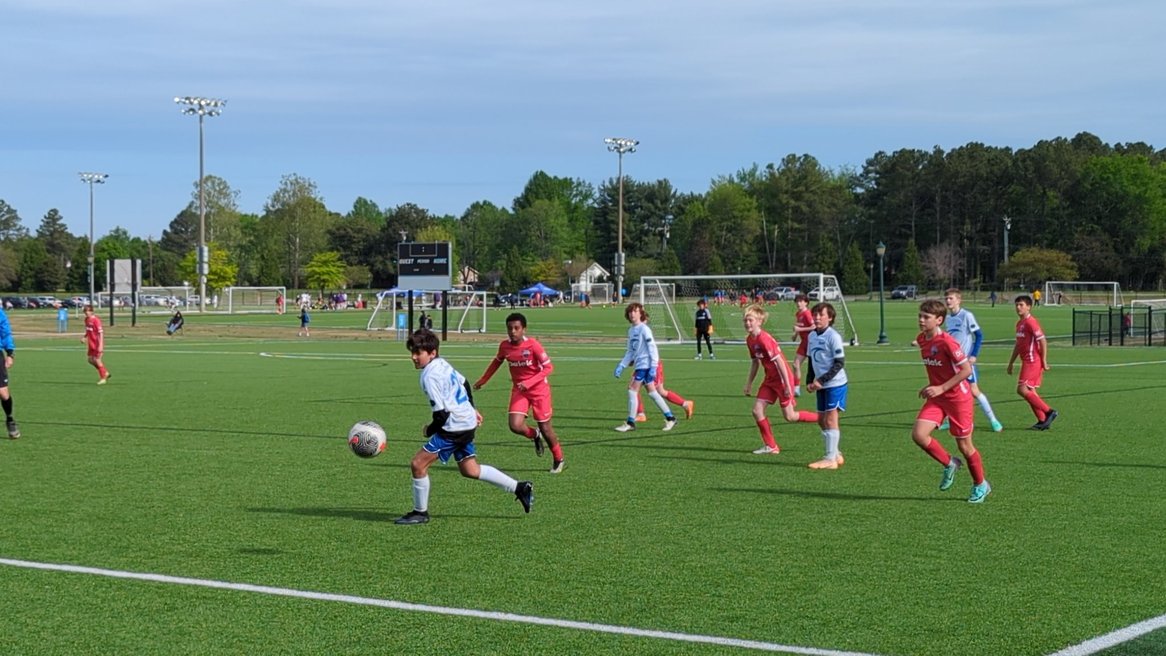
The primary reason for this major change is to solve the "trapped player" problem. A trapped player is a child whose birthday places them in an older soccer age group than their school grade. This creates a major disruption at two key moments in their youth career. The first is in eighth grade. When their ninth-grade teammates move on to play for their high school teams in the fall, the eighth-grade "trapped player" is often left without a full team to play on for a season. This negatively impacts their development and social experience. The same issue reappears four years later, when players in their senior year of high school can be displaced on their club team by college freshmen who are still in the same birth year age group.
Fixing this issue is a core goal of the new August 1st cut-off. Mike Cullina, the CEO of US Club Soccer, noted that 2-5 players per team were negatively affected by the January 1st cut-off. That represents hundreds of thousands of players nationwide. By aligning soccer age groups with school grades, the change also helps more kids play on teams with their friends and classmates. This social connection is a powerful factor in player retention, as it makes the sport more enjoyable and builds stronger team and community bonds.
U.S. Soccer's Policy Shift on Player Registration
On December 20, 2024, U.S. Soccer announced a pivotal change to its player registration policy following a comprehensive ecosystem review. In a move to provide greater flexibility to its members, the federation decided to allow youth soccer organizations to determine their own age group registration cut-offs. This landmark decision, detailed in U.S. Soccer’s Statement on Final Player Registration Decision, empowers leagues and state associations to choose a model that best serves their communities. This policy change has paved the way for a unified movement among many of the nation's top youth leagues to adopt an August 1st cut-off, aligning with the school year.
ECNL (boys and girls)

The Elite Clubs National League (ECNL), for both its boys and girls programs including the ECNL Regional League, will be adopting the August 1 to July 31 age group formation calendar starting in the 2026-27 season. This move is part of a collaborative effort with other major youth soccer organizations to create more consistency across the soccer landscape. The primary goal is to allow players to participate with and against their school-grade peers, which is believed to enhance player development and social experience. This adjustment, detailed by US Club Soccer, is a return to a 'school year' registration model intended to reduce the number of 'trapped players' who are in a different soccer age group than their classmates.
Girls Academy
The Girls Academy (GA) has also committed to the seasonal-year age group formation, with the new August 1 to July 31 registration window beginning in the 2026-27 season. The league emphasized that this decision was made after considering the collective needs of its member clubs and the importance of aligning with other national organizations. By synchronizing with the academic calendar, the GA aims to create a more holistic and supportive environment for its female players, ensuring a more consistent developmental pathway. The current birth-year registration (January 1 - December 31) will remain for the 2025-26 season, as outlined in their announcement.
DPL

The Development Player League (DPL) is actively monitoring the landscape-wide shift back to a school-year registration calendar. While an official decision is pending, the league has been in constant communication with its sanctioning body and other key leaders in the soccer community to prepare for the potential implications of this change. The DPL is committed to ensuring its members are well-informed and prepared for any adjustments to the age group formation, as noted in their official update.
USYS

As one of the largest youth soccer organizations in the country, USYS National League has officially announced its transition to an August 1 to July 31 age group player formation cycle for the 2026-27 season. This decision was made after extensive review and in collaboration with other major soccer bodies to better align players with their school-grade peers, with the goal of increasing inclusivity and participation. As detailed in their news release, all USYS league and cup competitions, including the National Championship Series, Presidents Cup, and National League, will adhere to the new age group structure.
NPL

The National Premier Leagues (NPL), which is sanctioned by US Club Soccer, will also be implementing the August 1 age group cut-off for the 2026-27 season. This change is part of a unified effort to address the issue of 'trapped players' and to create a registration system that more closely mirrors the school calendar. The move is expected to have a positive impact on player retention and provide a more logical and socially beneficial structure for team formation within the NPL. More information is available via the US Club Soccer announcement.
AYSO
The American Youth Soccer Organization (AYSO) has joined the other major youth soccer organizations in adjusting its age group cut-off date to August 1, effective with the 2026-27 season. AYSO highlights that this change will help maximize the number of players who can participate in soccer with their friends from school, which is anticipated to have a positive correlation with player recruitment and retention. This decision, explained on their Age Determination page, marks a return to the age group cut-off that was in place prior to 2017.
MLS NEXT

In a critical divergence from the rest of the youth soccer landscape, MLS NEXT will NOT be changing its age group registration. The league, which serves as the primary professional player pathway in the U.S., will continue to use the January 1st to December 31st birth year system. This decision also applies to related programs like MLS NEXT 2.
The reason for this is to maintain alignment with international standards. Global soccer, including FIFA youth tournaments and the international scouting market, operates on a strict birth year calendar. For MLS NEXT, whose mission is to develop future professional and international players, sticking to the birth year model is essential for a few key reasons:
- International Competition: It ensures their teams are structured correctly for international tournaments and showcases.
- Scouting: It provides a consistent framework for scouts from professional clubs around the world to evaluate and compare players.
- Professional Pathway: It mirrors the registration standards used by professional academies globally, preparing players for the next step in their careers.
This creates a split in the American youth soccer system. Clubs that have teams in both MLS NEXT and other leagues like ECNL will have to manage two different registration systems simultaneously, which will present a logistical challenge.
2026-27 Birth Year vs Grade Comparison Chart
The shift from "Birth Year" to "School Year" registration can be confusing. Here are some tools to help determine a player’s age group based on their date of birth.
- Soccer Player Age Group-Roster Formation Tool - https://www.ussoccer.com/ecosystem-review/player-registration/age-group-calculator
The table below shows how the age groups will be structured for the 2026-27 season under both systems. For the "School Year" system, a "U10" player, for example, would be a player born between August 1, 2017, and July 31, 2018. For the "Birth Year" system used by MLS NEXT, a "U10" player is simply a player born in the calendar year 2017.
| Age Group (2026-27) | New School Year | Team Grade (2026-27) | |
|---|---|---|---|
| U-7 | Born Aug 1, 2019 – Jul 31, 2020 | 1st Grade | |
| U-8 | Born Aug 1, 2018 – Jul 31, 2019 | 2nd Grade | |
| U-9 | Born Aug 1, 2017 – Jul 31, 2018 | 3rd Grade | |
| U-10 | Born Aug 1, 2016 – Jul 31, 2017 | 4rd Grade | |
| U-11 | Born Aug 1, 2015 – Jul 31, 2016 | 5th Grade | |
| U-12 | Born Aug 1, 2014 – Jul 31, 2015 | 6th Grade | |
| U-13 | Born Aug 1, 2013 – Jul 31, 2014 | 7th Grade | |
| U-14 | Born Aug 1, 2012 – Jul 31, 2013 | 8th Grade | |
| U-15 | Born Aug 1, 2011 – Jul 31, 2012 | 9th Grade | |
| U-16 | Born Aug 1, 2010 – Jul 31, 2011 | 10th Grade | |
| U-17 | Born Aug 1, 2009 – Jul 31, 2010 | 11th Grade | |
| U-18 | Born Aug 1, 2008 – Jul 31, 2009 | 12th Grade |
League-by-League: Who's Changing and When?
To make it simple, here is a breakdown of the major national leagues and how they are affected by the age group registration changes. All changes are set to take place for the 2026-27 season.
| League | Changing to School Year? | Registration System for 2026-27 |
|---|---|---|
| MLS NEXT | No | Birth Year (Jan 1 - Dec 31) |
| ECNL Boys | Yes | School Year (Aug 1 - Jul 31) |
| ECNL Girls | Yes | School Year (Aug 1 - Jul 31) |
| Girls Academy (GA) | Yes | School Year (Aug 1 - Jul 31) |
| USYS National League | Yes | School Year (Aug 1 - Jul 31) |
| NPL | Yes | School Year (Aug 1 - Jul 31) |
| AYSO | Yes | School Year (Aug 1 - Jul 31) |
| DPL | Yes | School Year (Aug 1 - Jul 31) |
What Parents and Clubs Should Do Before 2026-27
With these changes on the way, proactive planning is key. The good news is that the 2025-26 season will operate as usual, giving everyone a full year to prepare for the 2026-27 transition. For parents, the first step is to understand the rules for the specific league your child plays in. If your child is in MLS NEXT, nothing changes. If they play in ECNL, GA, USYS, or another league making the switch, talk to your club's director to see how they plan to manage roster adjustments.
For clubs, the work begins now. Administrators should start mapping out their 2026-27 rosters based on the new age groups. This will help identify potential gaps or overlaps in player numbers. Clubs with teams in both MLS NEXT and other leagues will face the added complexity of managing two different systems. Clear, consistent communication with coaches and families will be essential to ensure a smooth transition. While the change may cause some short-term disruption, the long-term goal is a more stable and player-friendly system for the majority of participants.

Frequently Asked Questions (FAQ)
When does this youth soccer age group change take effect? The new August 1st age group cut-off will be implemented by most major organizations starting with the 2026-27 soccer season.
Why is MLS NEXT not changing its age group system? MLS NEXT is keeping the January 1st birth year cut-off to stay aligned with international soccer standards, including FIFA youth tournaments and global professional academies. This is crucial for its mission as a professional development pathway.
Will my child's team be split up? It is possible. Players with birthdays from August through December may find themselves grouped with players from the previous birth year. It's best to talk to your club to understand how they plan to manage the transition.
What is a "trapped player"? A "trapped player" is a player who is in an older soccer age group than their school grade due to the January 1st cut-off. This often causes them to miss a season of play in 8th grade when their older teammates are playing high school soccer.
Does this change affect college recruiting? No. College coaches recruit players based on their talent and high school graduation year, not their specific youth soccer age group. The registration change will not impact a player's ability to be recruited.
Which organizations are making this change? The three largest youth soccer organizations in the United States are all moving to the school year system: US Club Soccer, US Youth Soccer (USYS), and the American Youth Soccer Organization (AYSO). This covers most leagues outside of MLS NEXT.